


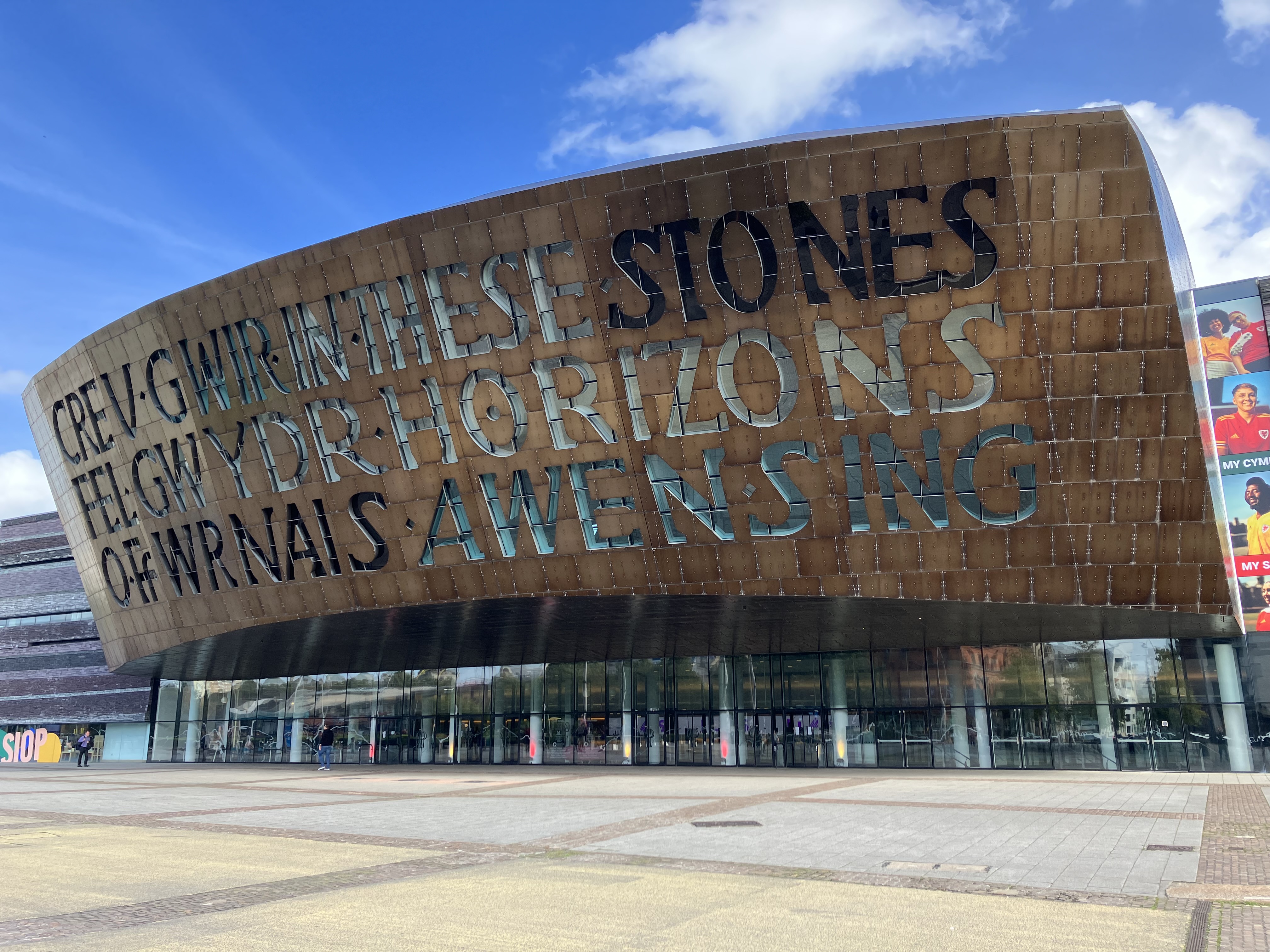
How Wales Millennium Centre brings its event workforce together with Parim
For large venues, workforce planning is rarely as simple as building a rota.
People move between teams. Staffing requirements change from one event to the next. A quiet afternoon can be followed by an evening where several spaces are live at once, each with different roles to fill and different demands on the people running them.
At Wales Millennium Centre, that complexity is part of everyday operations. The team supports at least seven shows in a typical week, alongside bars, graduations, VR experiences and other events, drawing on a workforce that spans customer-facing roles, Food & Beverage, Security and other operational functions.
Keeping that workforce moving is part of Laura Fear's role as Volunteering & Shift Coordinator. Working behind the scenes of Wales Millennium Centre's front-facing operation, Laura manages rotas for its customer assistants while working closely with the wider teams involved in delivering events across the venue.
The challenge isn't simply filling shifts. It's being able to see how everything fits together.
Since introducing Parim, Wales Millennium Centre has grown from managing around 40–50 people through the platform to more than 200 today. We spoke to Laura about how Parim has evolved alongside the operation, what that looks like during its busiest events, and why having a clearer view of the workforce has made such a difference.
Rebuilding operations with a better way to work
Wales Millennium Centre introduced Parim as it rebuilt its operations following the pandemic. It was a period of significant change across the organisation and an opportunity to rethink processes that had previously involved different departments working across different systems.
Laura joined around the same time as Parim was being embedded, so while she wasn't responsible for the systems that came before it, she remembers how quickly the new way of working became part of the operation.
Parim initially supported around 40–50 people across customer-facing and Food & Beverage teams but it didn't stay that size for long.
As the organisation found new ways to use the platform, adoption expanded into Security and HR/payroll. Today, approximately 200–215 people are managed through Parim, including employees who work across different departments.
“I remember those first few days of creating the first few accounts and thinking, ‘This is a new system, I’m not sure how it’s going to work.’ Now it’s just become integral to everything that we do.”
Having more of the operational workforce in the same place has made it easier to manage those overlaps. If someone works across departments, managers can see when they're already scheduled elsewhere, understand how resources are being used across the venue and make decisions with a better view of the operation as a whole.
“It’s easier to manage workload. It’s easier to make sure that everybody’s where they need to be, when they need to be.”
Making complex events easier to manage
At Wales Millennium Centre, the rota starts with the event.
The team builds its staffing requirements around individual performances and activities, creating separate events in Parim for different areas of the operation before using the schedule to manage the detail. A show might have one staffing requirement, its bar another, while an experience elsewhere in the venue needs its own team at the same time.
That structure gives managers something Laura returned to repeatedly during our conversation: the bigger picture.
Instead of contacting another department to ask whether someone is working, whether they could be moved or where there might be gaps, teams have greater visibility of what's already happening across the operation.
“Everybody’s a lot more in the know. You get this open, easy, big picture. You can see everything that’s going on. I think that’s been the biggest game changer for us.”
And the more complex the event, the more valuable that visibility becomes.
A recent VR experience involved four separate pieces running simultaneously, each requiring multiple members of staff every day. On paper, Laura describes the scheduling requirement as an “absolute nightmare”. In Parim, the operational team could work alongside the VR team to see the requirements, identify gaps and make sure each part of the experience was properly staffed.
Then there are graduations, where the sheer number of moving parts can make workforce planning considerably more complex.
“You look at the busier periods, things like the graduation ceremonies, and you think there is absolutely no way that we could do this without a system like Parim that makes those big events easy to schedule.”
Without that central view, the alternative could mean piecing together availability manually, emailing employees and trying to maintain an accurate picture as things change. For an operation of this scale, that simply isn't practical.
Giving managers visibility and staff more control
The same visibility that helps Wales Millennium Centre plan an event also changes the day-to-day experience for the people involved in delivering it.
Managers can check who's working from their phones rather than returning to a laptop or asking another team. Employees, meanwhile, can use the Parim app to see available shifts and apply for the ones they can work.
That changes the dynamic of filling a rota. Rather than every unfilled shift creating another task for the scheduling team, employees can take a more active role in managing their own work.
“We don’t necessarily have to go searching for people to work the shifts. If somebody’s available, they can sign up for it, which has been great.”
Laura describes that functionality as “game changing”, particularly because the app itself requires very little explanation for employees to start using it.
For the operational team, it's one less manual process. Across hundreds of workers and a busy events calendar, those differences start to add up.
Less time managing the process
There are plenty of small administrative tasks behind a successful event that an audience will never see: building rotas, adjusting them, checking availability, filling gaps, recording worked hours and preparing information for payroll.
Parim brings more of that process together. Laura describes scheduling as considerably quicker and more efficient, with functionality such as drag-and-drop scheduling making it easier to build and adapt rotas as requirements change. Once those shifts have been worked, employees' clock-in and clock-out information supports the payroll process too.
“Payroll is essentially done for us. It’s just a case of double checking things.”
The individual efficiencies might sound small. At the scale Wales Millennium Centre operates, they're anything but.
The value isn't simply doing the same administrative work slightly faster. It's reducing the amount of manual intervention required to keep the workforce operation moving, leaving teams with more time for the decisions, people and situations that genuinely need their attention.
Knowing the operation is covered
Ultimately, all of this comes down to a fairly simple question: when the doors open, are the right people in the right places?
For Laura, there is a point in every scheduling cycle when the work clicks into place. The rota is built, shifts are live and the gaps have been filled.
“I look forward to the period of the month where I know the rota is all sorted, everything is live, all the shifts are filled.”
That confidence matters in an environment where requirements can change quickly and multiple teams may be involved in delivering the same event. Having one shared view means the people responsible for the operation can see what's covered, understand where attention is still needed and respond more easily when plans change.
It's also a long way from those first 40–50 users.
Growing with Wales Millennium Centre
Today, Parim supports more than 200 people at Wales Millennium Centre, but the relationship has developed in other ways too. Laura has seen the platform evolve during the years the organisation has used it, while the support behind the technology has remained an important part of the experience.
When the team needs help, that can be anything from remembering where to find a particular function to resolving a more significant issue. Laura describes the response from Parim's support team as consistently quick and focused on finding a solution.
“The support has been phenomenal throughout.”
That relationship matters because the demands placed on venue operations don't stand still. Event programmes change, teams evolve and new requirements emerge. The systems behind them need to be able to evolve too, without adding another layer of complexity for the people using them.
For Wales Millennium Centre, Parim has grown from a scheduling system used by two teams into a platform that connects much more of the workforce behind its events. It gives managers greater visibility across departments, employees more control over the shifts they work and operational teams a simpler way to manage the administration happening behind the scenes.
The result is not just an easier rota. It's a clearer view of the people behind the operation and greater confidence that, however complex the event, the workforce is ready to deliver it.
And Laura's advice to another major venue or event organisation facing the same challenges? “Yes, do it.”


